

How to Elope in Italy: The Ultimate Guide for a Dreamy, Legal, and Effortless Italian Elopement
Italy. Just saying the word brings to mind ancient cobblestone streets, slow-sipped espresso in the piazza, golden vineyards, and the magic of saying your vows under the Tuscan sun or along the Amalfi cliffs. If you're dreaming of an elopement in Italy, you're in the right place. This guide is packed with everything you need to know—from the legalities to logistics, travel tips to packing advice—so you can plan a relaxed, intentional, and romantic elopement in one of the most beautiful countries in the world.
Whether you're imagining a private ceremony at a lakeside villa or exchanging vows surrounded by rolling hills and cypress trees, this is your go-to resource for eloping in Italy in 2025 and beyond.
Why Elope in Italy?
Italy offers more than just a gorgeous backdrop—it offers a feeling. A sense of timelessness. A slow, sweet rhythm that invites you to be fully present with each other.
Here’s why so many couples choose Italy for their destination elopement:
Iconic Landscapes: Vineyards in Tuscany, cliffs in Positano, alpine peaks in the Dolomites, lakeside elegance in Como—each region offers its own flavor of magic.
Incredible Food & Wine: A multi-course meal under the stars. A bottle of prosecco on the terrace. Italy turns dinner into an experience.
Romantic Culture: Italy is practically the birthplace of romance—centuries of art, poetry, and music have soaked into its soil.
Travel-Ready Experiences: Honeymoon where you elope. Visit Florence, Venice, Rome, and the Cinque Terre—all in one trip.
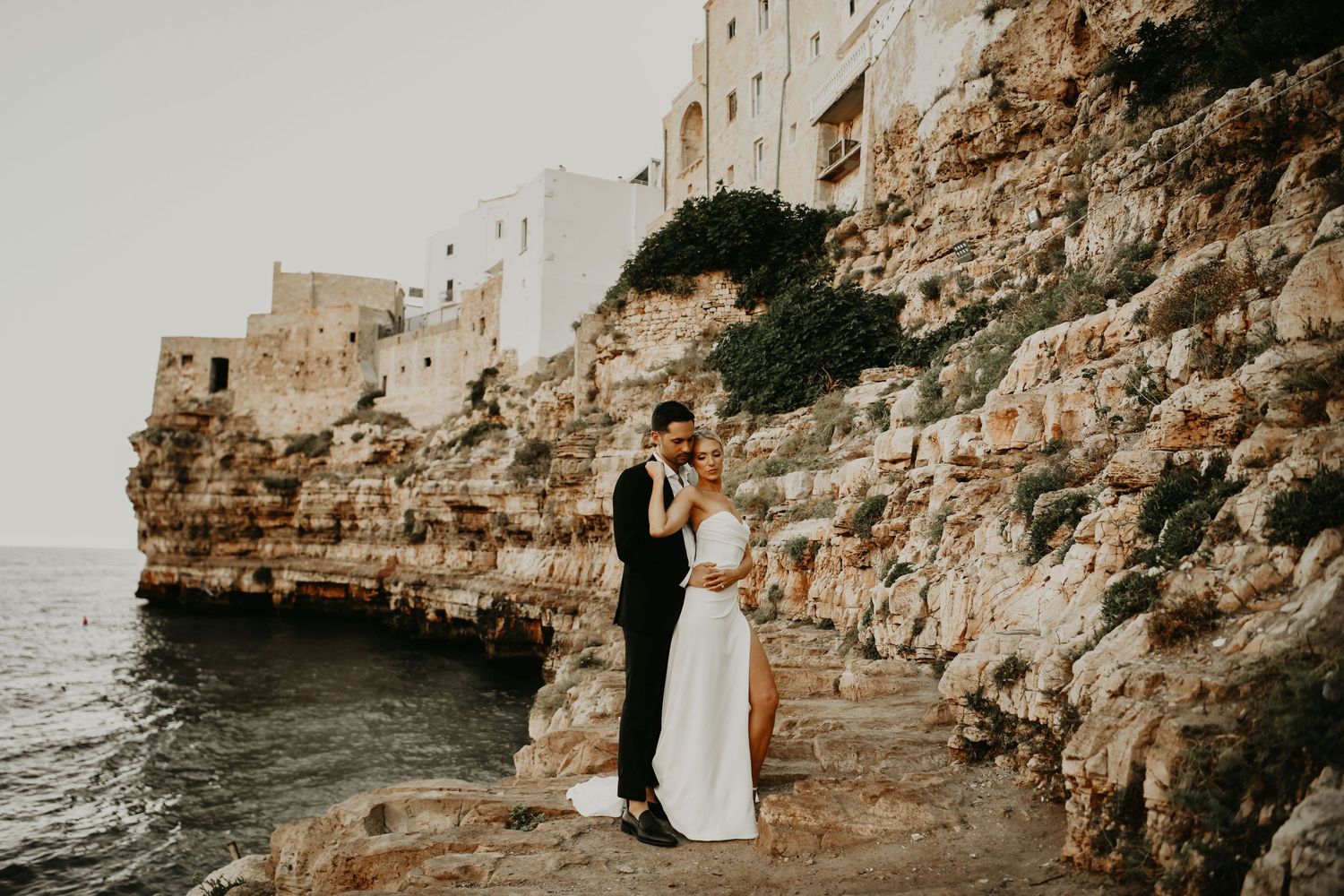
Getting Married in Italy Breakdown:
Step 1: Gather Your Legal Documents
To legally elope in Italy as a foreigner, you’ll need to collect a few important documents—some of which must be translated into Italian and legalized (aka “apostilled”). The exact requirements vary slightly depending on your home country and personal situation, but here’s a general checklist:
- Valid passports for both of you
- Full birth certificates (translated into Italian and apostilled)
- A Nulla Osta – this is a legal affidavit issued by your home country’s embassy or consulate in Italy that states you’re free to marry
- An Atto Notorio – a sworn declaration made in front of either an Italian consulate or Italian court with two witnesses confirming there’s no legal reason you can’t get married
- Divorce decree or death certificate if either of you has been previously married
Hot tip: Start this process early. I always recommend starting paperwork at least 3–6 months before your ceremony so there’s no last-minute stress.
Step 2: Submit Your Application in Italy
Once you’ve gathered your paperwork, you’ll need to submit everything to the local Italian Marriage Office (Ufficio di Stato Civile) in the town where your ceremony will take place. It’s a good idea to call ahead or email the office directly, since some municipalities may have their own additional requirements or timelines.
For couples eloping in places like Rome, Florence, or Venice, these offices are used to handling foreign weddings and can be incredibly helpful.
Step 3: Declare Your Intent to Marry in Italy
This is a simple (but required) part of the process: once you’re in Italy, both of you must appear in person at the local town hall a few days before your ceremony to officially declare your intent to marry.
If you don’t speak fluent Italian, an interpreter will need to be present for this part—and for the ceremony itself. (No worries—I can help you find a local translator if needed!)
Most couples plan to arrive in Italy at least 4–5 days before their ceremony to complete this step and get comfortable before the big day.
Step 4: Say “I Do” — Italian Style
Your civil ceremony will take place in an Italian town hall or approved venue, and will be performed in Italian by a local official. You’ll need two witnesses over the age of 18, and your translator if you’re not fluent.
Once the vows are exchanged, you’ll receive your legal Italian marriage certificate (Estratto dell’Atto di Matrimonio)—congratulations, you’re officially married in Italy!
Step 5: Make It Valid in Your Home Country
After the ceremony, you may need to take an extra step or two to make your marriage legally recognized back home.
Typically, this means:
Getting your marriage certificate translated and apostilled
Sometimes registering the marriage with your local registry office, depending on your country
For U.S. couples: most states accept a properly legalized Italian marriage certificate without additional steps, but it’s always best to double-check with your state’s office.
Final Thoughts: You Can Totally Do This
Yes, getting legally married in Italy as a foreigner takes a little planning—but trust me, it’s completely doable. With the right guidance (hi, that’s where I come in 💁♀️), the process is straightforward and stress-free.
And in the end, you’ll have the most romantic, cinematic, wildly beautiful “I do” surrounded by Italian magic, and a love story that started in one of the most iconic places on Earth.
Still feeling a little overwhelmed by the legal process? Many couples choose to legally marry at home and then have a symbolic elopement in Italy—it looks and feels the same, with a lot more flexibility.
Whichever route you choose, I’m here to help you every step of the way. Let’s make this Italian elopement dream real. 🇮🇹✨
Traveling to Italy for Your Elopement
Planning your dream elopement in Italy means more than picking a gorgeous location—it also means navigating how to get there, where to stay, and how to get around. The good news? Italy is incredibly travel-friendly, especially for couples planning an intentional, meaningful, and relaxed elopement experience.
Here’s everything you need to know about traveling to Italy for your elopement—broken down into the most important categories:
Booking Flights: Where to Land for Your Italian Elopement
Depending on the region you’re eloping in, you’ll want to fly into the most convenient airport to minimize long, tiring transfers:
Northern Italy
Milan Malpensa (MXP) – Best for the Dolomites, Lake Como, and Lake Garda. A major international hub with direct flights from the U.S. and Europe.
Venice Marco Polo (VCE) – Great for Veneto region, Dolomites, or romantic pre-elopement city days.
Verona (VRN) – A small, charming airport close to Lake Garda and the surrounding countryside.
Central Italy
Florence Peretola (FLR) – Ideal for Tuscany. Small airport, but super convenient if you’re staying in or near Florence.
Rome Fiumicino (FCO) – The largest airport in Italy. Great for Rome, Umbria, Tuscany, or even connecting elsewhere.
Southern Italy
Naples Capodichino (NAP) – The perfect gateway for Amalfi Coast, Capri, Sorrento, or southern countryside villas.
Catania (CTA) or Palermo (PMO) – For Sicily elopements—rich in culture, history, and dramatic coastlines.
Tip: Book early and consider flying into one city and out of another (multi-city) to make the most of your itinerary.
Transportation in Italy: How to Get Around
Navigating Italy is part of the adventure—and it’s easier than you might think when you know the best options by region.
Trains
Trenitalia and Italo are the two main providers.
High-speed trains connect major cities (Rome, Florence, Milan, Venice, Naples).
Regional trains are great for small towns like Pienza, Ravello, or Varenna.
Best for: Couples eloping in cities or well-connected towns, like Florence to Rome or Milan to Lake Como.
Book in advance online for cheaper rates and first-class comfort.
Car Rentals
Ideal if you're heading to the Tuscan countryside, Dolomites, or exploring Umbria.
Manual transmission is the default—request an automatic early if needed.
Avoid driving in central Rome, Florence, or Naples—ZTL zones (limited traffic zones) can result in fines if entered by tourists.
Best for: Couples who want freedom, flexibility, and to explore off-the-beaten-path gems.
Pro tip: Rent your car after you leave the big cities. For example, train to Florence → pick up car at the station → drive into Tuscany.
Private Drivers & Transfers
Best option for the Amalfi Coast, where roads are narrow and traffic is intense. My husband and I hired a private driver when we came into Positano because the roads are so narrow and curvy! We were so glad we did! After that, we took the buses and Ubers to get around from there.
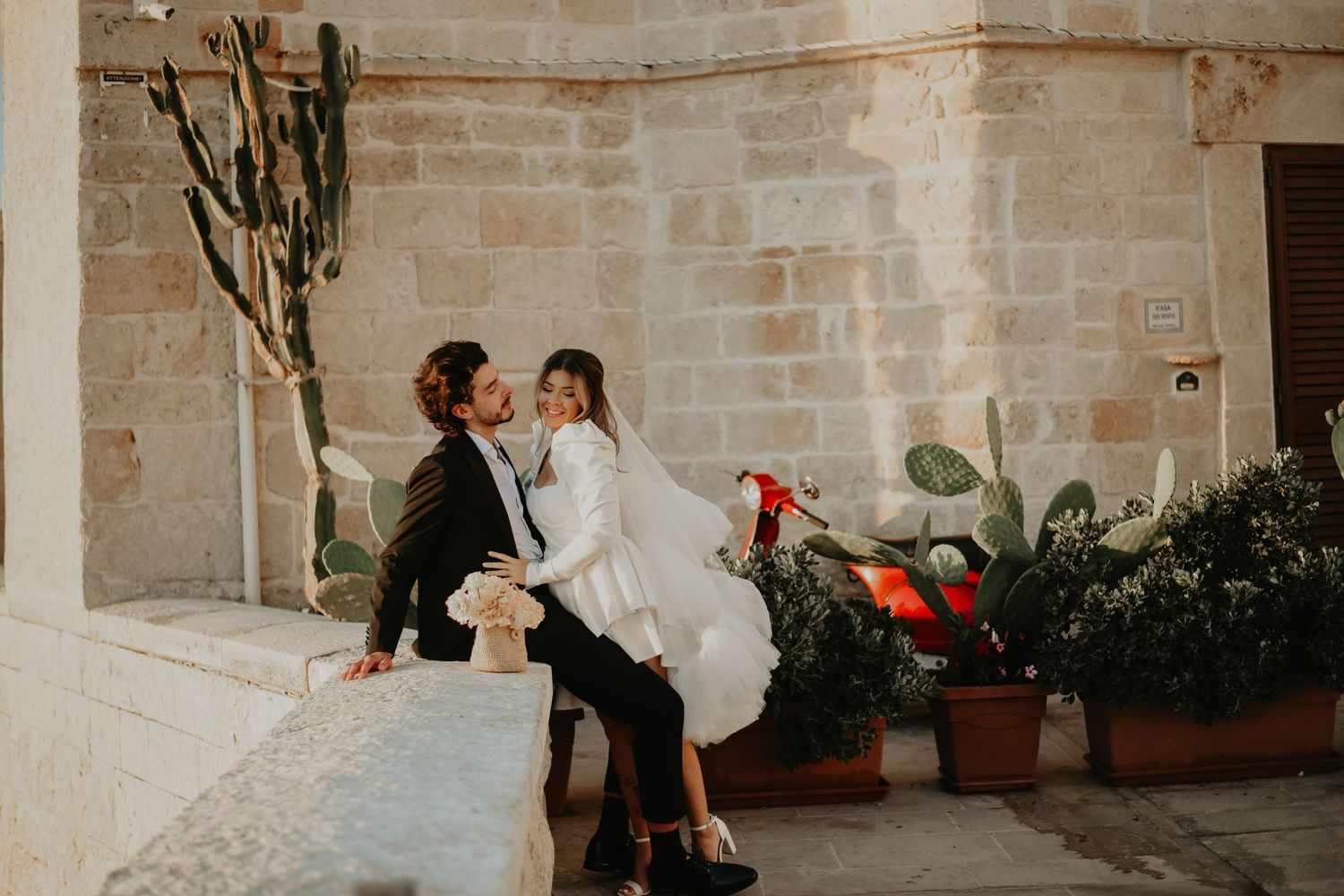
Consider a vintage Fiat 500 or Vespa tour for an epic, cinematic experience (yes, we can absolutely include this in your photos!).


Eloping in Italy is more than paperwork and plane tickets—it’s the chance to craft a wedding day that feels like pure, cinematic magic. With a bit of advance prep (and a seasoned Italy elopement photographer in your corner), the legal steps become straightforward, leaving you free to savor every sun-soaked view, every cobblestone stroll, and every “just-married” bite of gelato. Whether you choose a fully legal civil ceremony or a carefree symbolic vow exchange, your Italian “I do” will be a story you’ll tell for the rest of your lives—one steeped in romance, intention, and the timeless beauty of la dolce vita. Ready to start planning your own unforgettable elopement in Italy? Let’s chat and turn that dream into reality.